
Introducing Art Anatomy
You have to (re)start somewhere.

Dear Lucienne,
This is the first of a series of letters to you in which I will share what I know about the magnificent subject of figure drawing, with which I have a strange relationship.
I don’t know how it is now, but when I went to the Rhode Island School of Design in the 1980s, it was full of the kids who were the best draughtsmen in the graduating class of their respective high schools. That was me. At RISD, however, I was in the middle of the pack.
There were some techniques for which I had instincts. One of them was gesture, which is when you put down a figure drawing in thirty or sixty seconds. As soon as I saw the teacher demonstrate it, I could do it. Composition, too, came easily. The latter was a huge blessing. Not having a sense of composition is the visual equivalent of tone deafness, debilitating and hard to remedy.
Many other skills eluded me. I had two line weights: icepick and jackhammer. My sense of proportion wasn’t dependable. I never got the hang of inventing the figure from imagination. Because I was (and continue to be) interested in comics, that last problem was an annoyance.
I set out to address them. I drew thousands of lines to practice varying pressure. I measured and corrected to make up for the lack of felt proportion. I studied anatomy, mostly out of the Robert Beverly Hale books. I admired and drew from the George Bridgman books. I collected many others. Finally, to edify myself, I wrote an anatomy book, titled, simply, Art Anatomy. After failing to find a publisher for it, I published it at artanatomy.com using XSLT 1.0, a language so powerful, yet so horrifying that developers invented new templating systems rather than adopt it.
I announced that illustrations were forthcoming. They never came forth. The book sat on the web for a couple of decades as my work went in a completely different direction. I was captivated by modernist ways of representing the figure. Recent paintings employ broad areas of flat color, simplified shapes, and a comics-like way of rendering by signs.
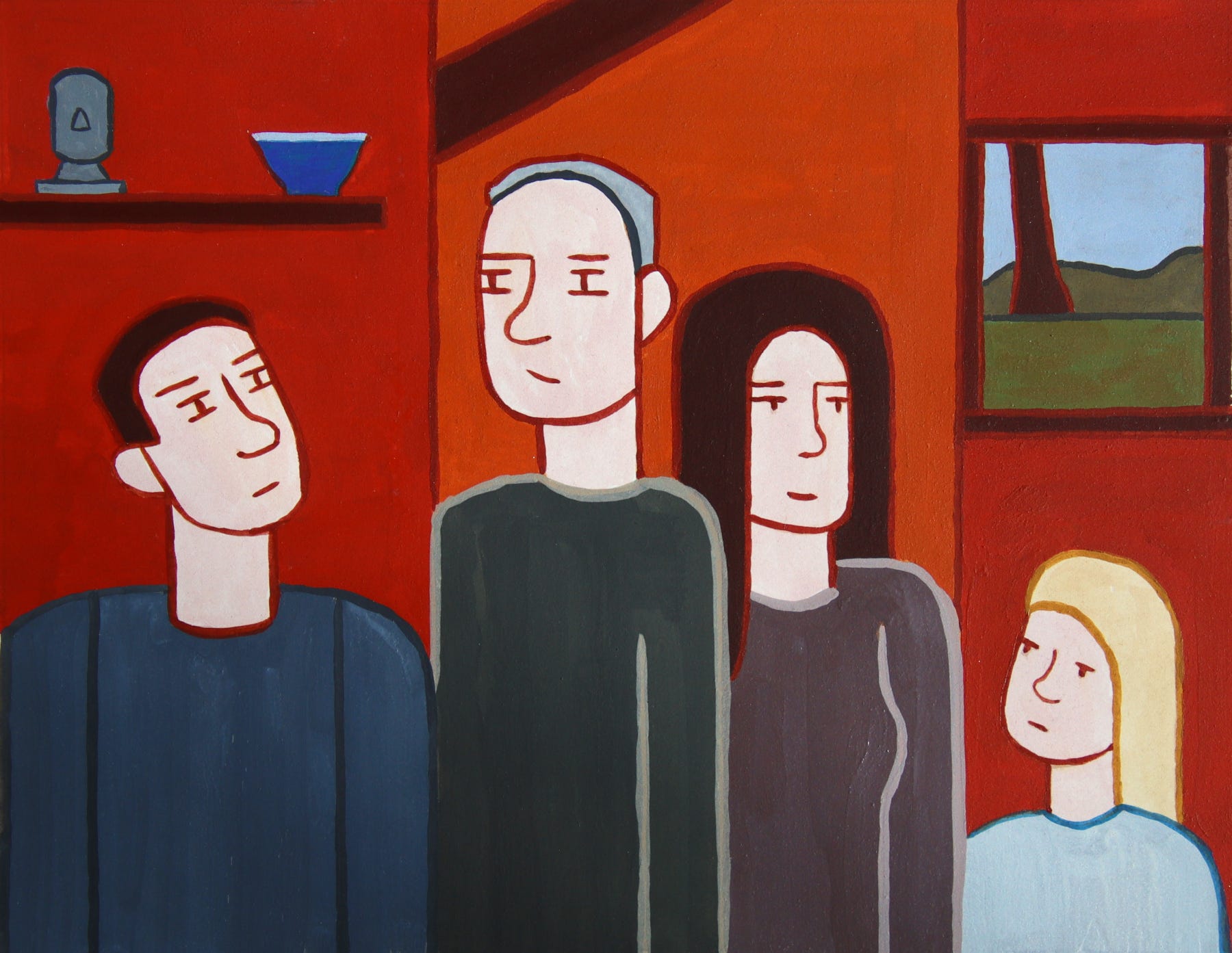
They no more require anatomy than they require algebra. Some might regard my not completing the book as a failure, but I was honoring my art. When the art no longer required that knowledge, I stopped pursuing it. Nevertheless, the fact that there was a pretty great art anatomy book sitting un-illustrated on the web bothered me sometimes.
When COVID hit, I was moved to complete two abandoned projects. One of them was the publication of Aphorisms for Artists, which was also sitting on the web, unloved. I accomplished that in 2024. Your mother sent me a picture of what you did to the copy I gave you. It was ragged from repeated reading. I have hardly ever been so proud of anything.
The other is Art Anatomy. Worldwide lockdowns caused drawing clubs to move online. There’s no substitute for drawing the model in person, but we wanted to support the models while they couldn’t work in the regular way. I got used to live, on-screen figure drawing. I also finally learned how to use a digital tablet. Now many of these clubs are hybrid online/in-person, and more people are drawing the figure than ever.
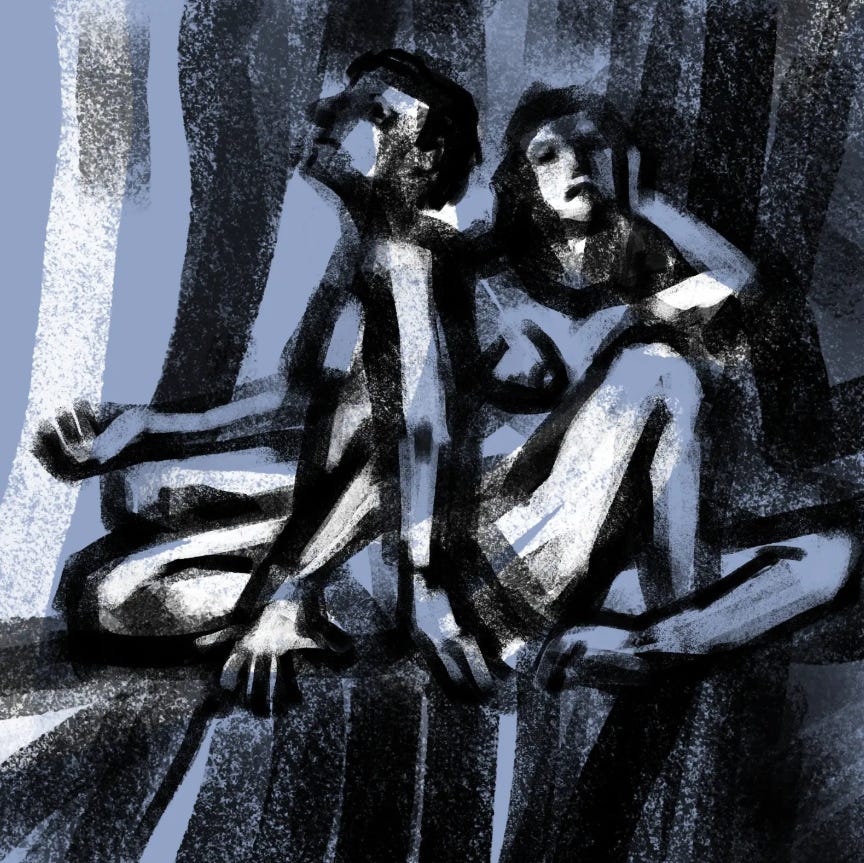
COVID wasn’t the only impetus to complete Art Anatomy. Another one is you. Your mother, again, told me that you were frustrated with your figure drawings and wanted some instruction. That a teenager in the age of the AI boom was interested in figure drawing struck me. You may be unusual or even unique in your interest, but there is little reason to know this material apart from the sheer pleasure of knowing it and using it, and here you are anyway.
Weirdly, circumstances have gradually become favorable to the sprouting of this acorn planted twenty years ago. As the discipline of art criticism fades from relevance, I’m transitioning professionally from artist-critic to artist-wizard. I am dusting off the ancient tomes and learning to read their script. I am rediscovering arcane knowledge. The magic itself has developed as well. XSLT is on version 3.0. Spells that used to require animal sacrifice now need only polite incantations and the characteristic wizardly hand-waving. The tablet eliminates the physical-art-to-digital-image pipeline.
You reminded me of how much I have missed teaching. Alas, this is a strange and unprecedented time for the kind of schools at which I used to teach. Publishing an art textbook on the web in the 2000s didn’t get much traction. Now the colleges are losing traction. Art Anatomy was, I believe, merely ahead of its time. I mentioned some technological changes above, but the biggest change took place in the overlap of technology and culture. When Art Anatomy went live, the only people in online communities were confirmed dorks. Now there’s a possibility that such communities will replace schools. This could end up being one of them if I make good on the promise of the book.
I think the subject of figure drawing is never going away. It survived photography. It will survive AI. You and I have estimable and sizable company in our captivation. I’m grateful for your interest, and the enduring interest of so many others.
Let’s draw.
Fondly,
Franklin
" it was full of the kids who were the best draughtsmen in the graduating class of their respective high schools. That was me. At RISD, however, I was in the middle of the pack."
Yeah, that was a really harsh awakening for me. By the end of my first Freshman Foundation Drawing I class, I thought: "Damn... there are kids here who actually can DRAW." Like, draw in the manner I more associated with the Old Masters and I'd been drawing my whole short life by then. Kids who on day one had a DOZEN line weights and they all looked interesting, and what's more: intentional. They also had either an innate or well-established sense of weight and proportion, along with a sense of perspective that made my work feel almost Byzantine by comparison. Lucky for me I was headed to Industrial Design the next year, but it was humbling for sure.
Anyway- hats off to you for reviving this project of yours. I am curious if you had the opportunity to take the Anatomy 101 class at Brown University, which was specifically offered for RISD students? It was taught by the head of Brown's Medical School in what was essentially an act of charity on his part, which he admitted. That class gave me a lifetime's basis for understanding how the body works, is put together and moves.
As an aside, those Fresh. drawing classes were brutally long for something that required you stand and put your full attention into what you were doing; something like 6 hours, with two hours of Art History in between. Truly the Basic Training of Art School!
Yessssssssss.... Looking forward to these letters.
"Ice pick & jackhammer" -- A subtle distinction indeed!